
Pelmeni are small dumplings that have conquered dining tables around the world with their simplicity and versatility. But did you know that their roots stretch all the way to Siberia, where they were born as a survival food for harsh winters? At Caspian, we want to honor the long history and cultural significance of these delicious dumplings.
The Birth and Origins of Pelmeni
Pelmeni are traditionally associated with the Russian peoples of Siberia, but their origins may lie even further east. According to some historians, pelmeni originated in the Ural Mountains region, where nomadic tribes prepared convenient and preservable foods for long journeys. The name "pelmen" comes from the Komi-Permyak words "pel'nyan", meaning ear-shaped bread. This refers to the unique shape of pelmeni, which has remained virtually unchanged for centuries.
Survival Food for Siberia's Harsh Winters
Pelmeni were the perfect survival food in harsh conditions. They were made from dough and filled with various ingredients such as ground meat, mushrooms, or cabbage. The stuffed dumplings were frozen outdoors, making them easy to store and quick to prepare. In winter, families boiled pelmeni in hot water or broth, and they provided a filling meal that kept the cold at bay.
Pelmeni Around the World
Although pelmeni are particularly known from Russian cuisine, they have many cousins around the world. For example:
- •In Poland and Ukraine, vareniki are well known — they resemble pelmeni but are often filled with potato, cheese, or berries.
- •In Georgia, khinkali are prepared — larger and juicier dumplings that are enjoyed without the cooking broth.
- •Chinese dumplings (jiaozi) share many similarities with pelmeni, and according to some theories, they may even have been the original inspiration in Siberia.
Modern Pelmeni Culture
Today, pelmeni are a popular dish not only in Russia but also in Eastern European and Central Asian cuisines. They have found their way onto the menus of Western restaurants as well. Pelmeni fillings and preparation methods have diversified; they can contain everything from traditional meat to exotic combinations such as goat cheese and spinach.
Pelmeni at Caspian
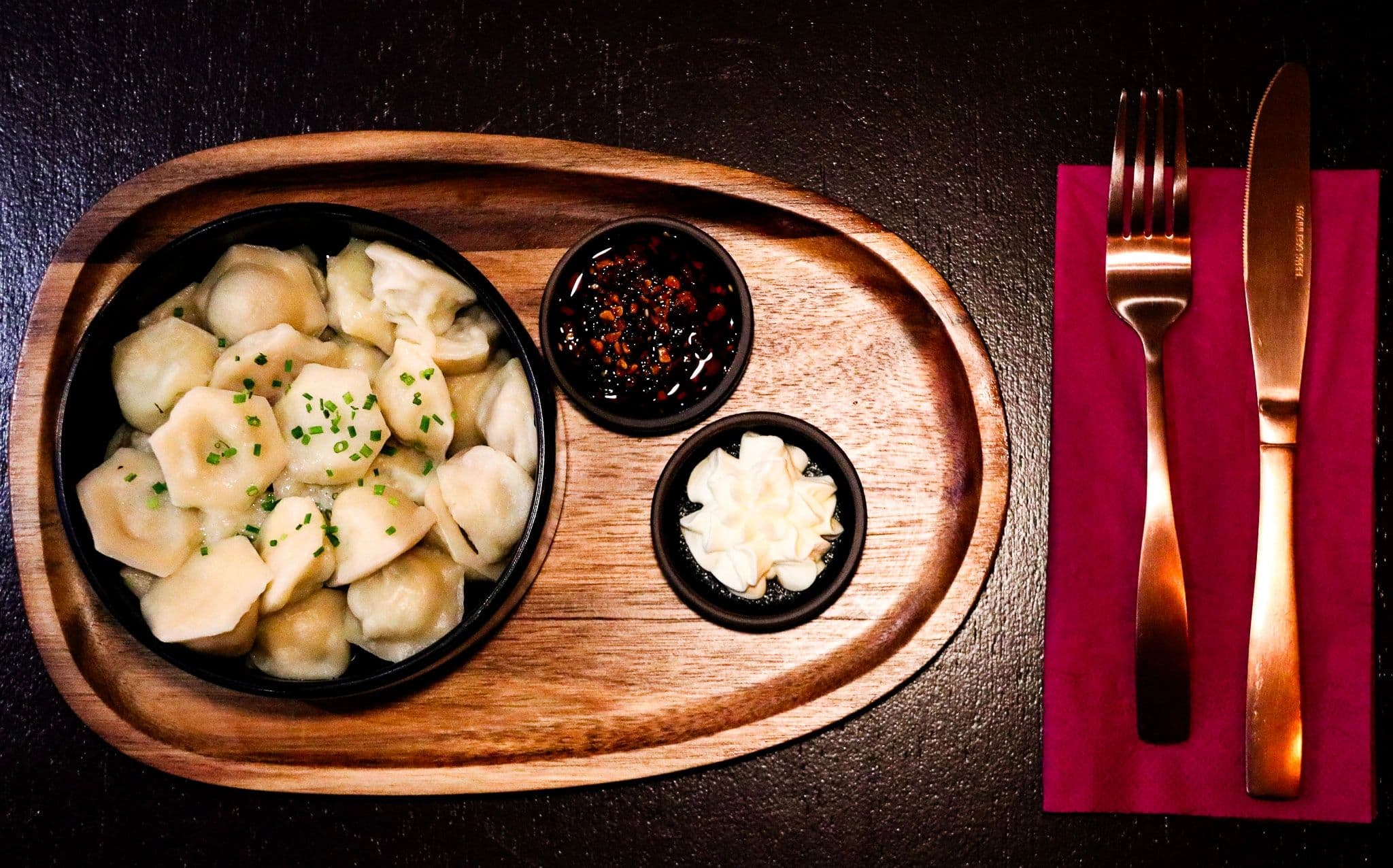
At Caspian, pelmeni are made by hand, honoring traditional recipes. The preparation process is precise: the dough is rolled to just the right thickness, and the filling is perfectly seasoned before the dumplings are carefully shaped. We serve our pelmeni either boiled and dressed with butter, or pan-fried until crispy, to suit every guest's preference.
Stories on a Plate
Pelmeni are not just food — they are culture, history, and a symbol of togetherness. Families have gathered around them for centuries, and their preparation is in many places a communal event. When you enjoy pelmeni at Caspian, you are not just tasting delicious food — you are tasting a piece of history.
Welcome to discover the world of pelmeni at Caspian — a journey of flavors begins!